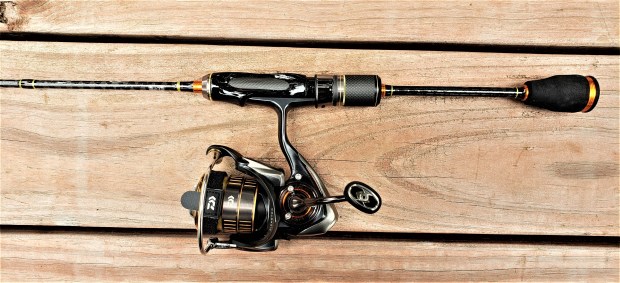
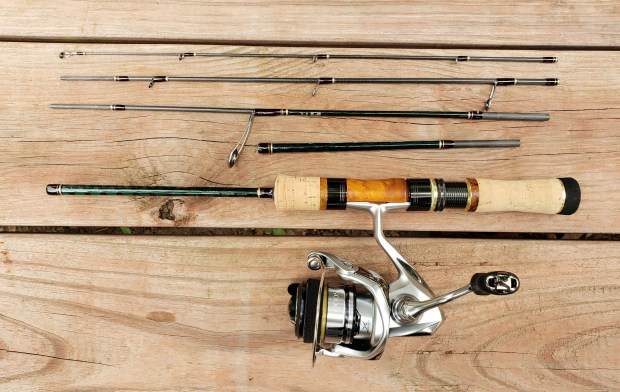
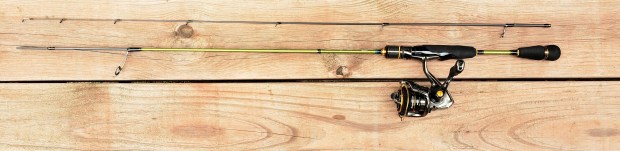
Daiwa Presso LTD 1025 reelMajorCraft Finetail Banshee FBA-602L rodShimano Vanford 1000 reelMajorCraft Troutino TTS-562L rodShimano Stradic FL 1000S reelMajorCraft Finetail Trekking and Traveler FTX-46/505UL rodShimano Soare Ci4+ 500S reelMajorCraft Finetail Works Tune Area Spec FTA-582UL rodShimano TwinPower C2000S reelTenRyu Lunakia LK6102S-MLT rod
Please don’t take this as me showing off…that’s not what I’m about. Rather, when researching JDM tackle, you run across names and numbers without pictures provided. I’m merely putting forth pictures to anyone interested in JDM tackle.
I have ZERO affiliation with MajorCraft but have found them to be good values in terms of quality and performance. There are LOTS of other brands out there and there are higher and lower priced rods and reels as well. As stated before…we are really happy with these rods in regards to price vs performance.
Two of the main places I purchase my JDM tackle from are Digitaka and JDMTackleHeaven. I have found them to be reasonably priced with fast/reliable shipping. Again, no affiliation. Also, Chris Stewart over at http://www.finesse-fishing.com has a selection of BFS rods, reels, lures etc. He’s based in NY so shipping might be faster on certain items.
I am by no means an expert on JDM tackle, rather I try to post stuff I have researched, purchased and used. I hope it might prove helpful to someone…Cheers!
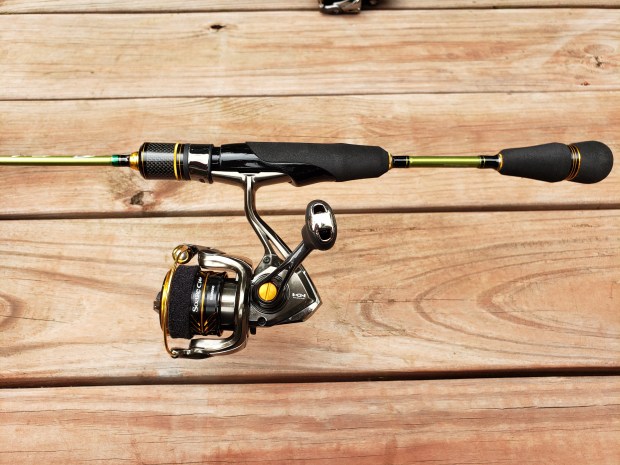
Shimano Calcutta Conquest BFS reelMajorCraft Finetail Area Stage FAX-B642UL rodShimano Calcutta Conquest BFS reelMajorCraft Finetail Trekking and Traveler FTX-B46/505UL rodShimano Calcutta Conquest BFS reelMajorCraft Finetail Stream FSX-B502L rodShimano Calcutta Conquest BFS reelNOT JDM: Shakespeare BMG2SC 46/1 UL rod
I know it sounds weird but recently I have started to become proficient with baitcasting tackle. Late bloomer I suppose, but it has been an interesting new aspect to my fishing.
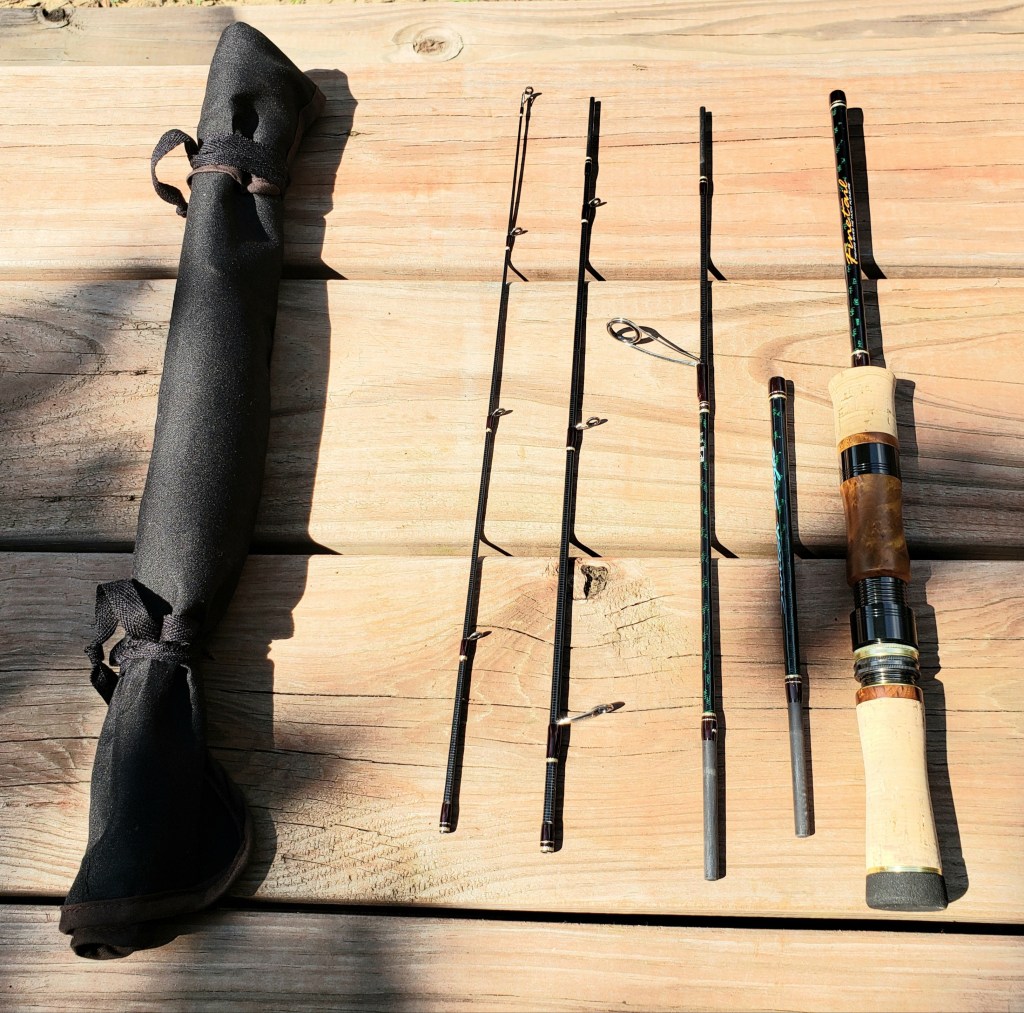
I have tried several different makes and models of pack rods through the years and have settled on the MajorCraft Finetail Trekking and Traveler series of rods.
The species of fish I’m chasing (Micropterus dolomieu velox…Neosho-strain Smallmouth Bass) do not require heavy tackle so these rods are more than adequate. I wanted something compact that I could stow in one of my packs and these are perfect for my needs.
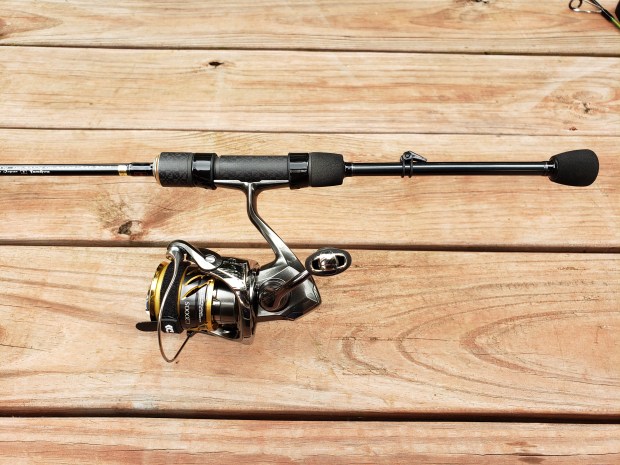
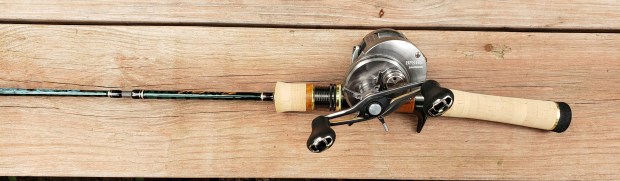
I chose the MajorCraft Finetail Trekking and Traveler Switch Style FTX-46/505UL and the baitcast version, the FTX-B46/505UL. MajorCraft does make shorter or longer versions of these rods.
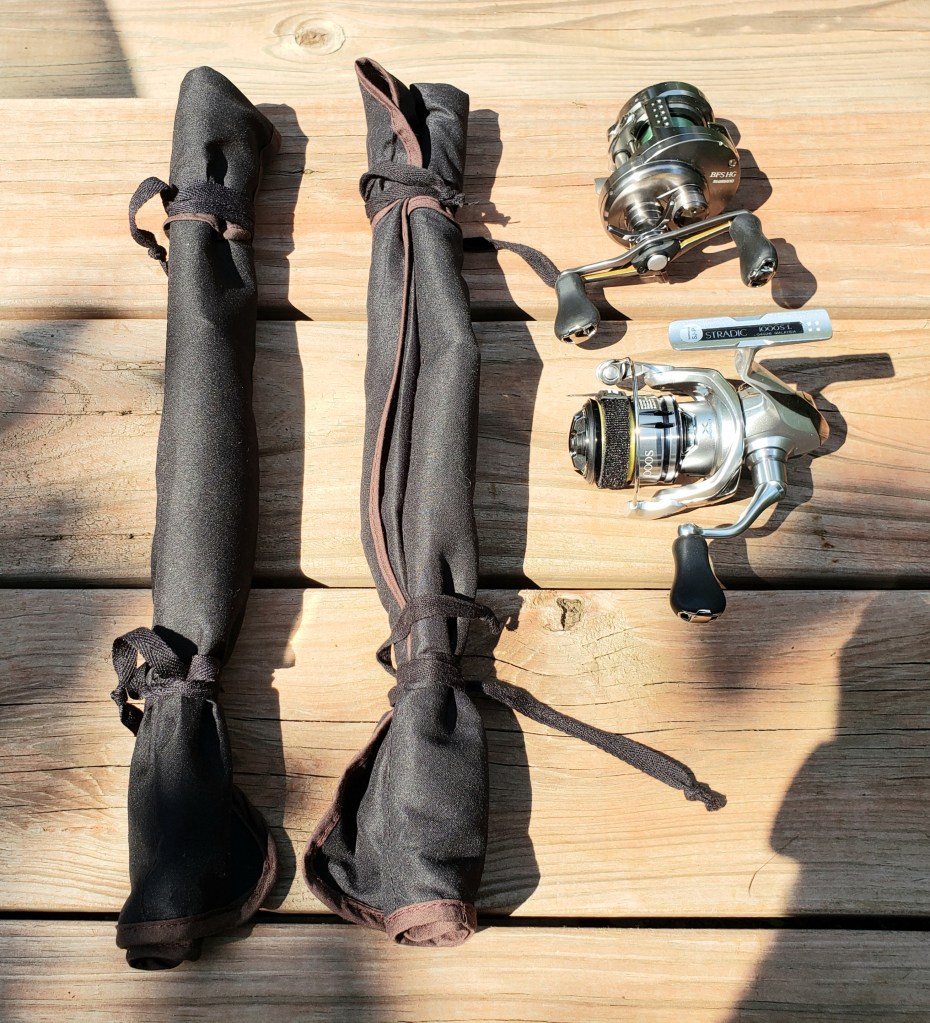
As you can see, they come in a heavy duty zippered pouch which thoroughly protects the rods. However, that comes at a significant weight- 12.1 ounces for the spinning rod and 13.1 ounces for the baitcast rod. So I opted to ditch the zippered cases and just stow the rods in the cloth sleeves they come in thereby reducing the weight to 3.6 ounces for the spinning rod and 4.1 ounces for the baitcast rods.
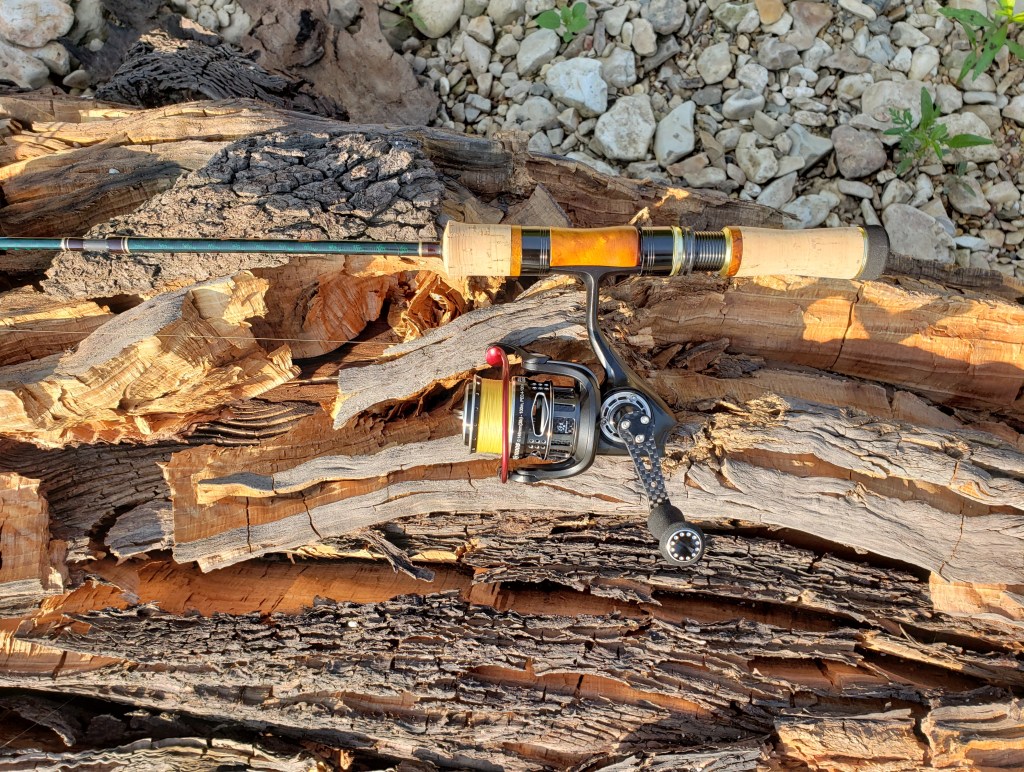
How I stow them in my pack. Currently I am using the Yeti Panga 28 or the Patagonia Stormfront Sling pack. They fit inside both without issues.The reels are a Shimano Calcutta Conquest BFS and a Shimano Stradic FL-1000.
I find this setup suits most of my needs for the small streams I have been fishing lately. As of yet I haven’t felt underpowered and have all the leverage I need and my casting distance is on par with other JDM rods I have. As a bonus, all of my gear fits inside my pack during transport so I rarely worry about the rods being broken.
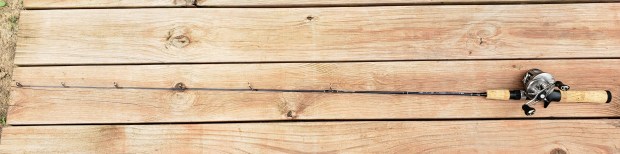
FTX-46/505UL spinning rod.FTX-B46/505UL baitcast rod.
For open stretches of a river I prefer the spinning rod but when things get tricky with overhanging trees and such, I prefer the baitcast rod since I find it to be more accurate. Plus, it also depends on what type of lures I’m using at any given time. Since these are 5-piece rods, I have the option to remove the 6 inch insert section and go with a shorter rod if necessary. I have yet to have one of these rods come apart while fishing, but I do check the sections periodically to make sure they are still in place.
I’ve caught quite a few fish on these and have been very pleased with their performance.
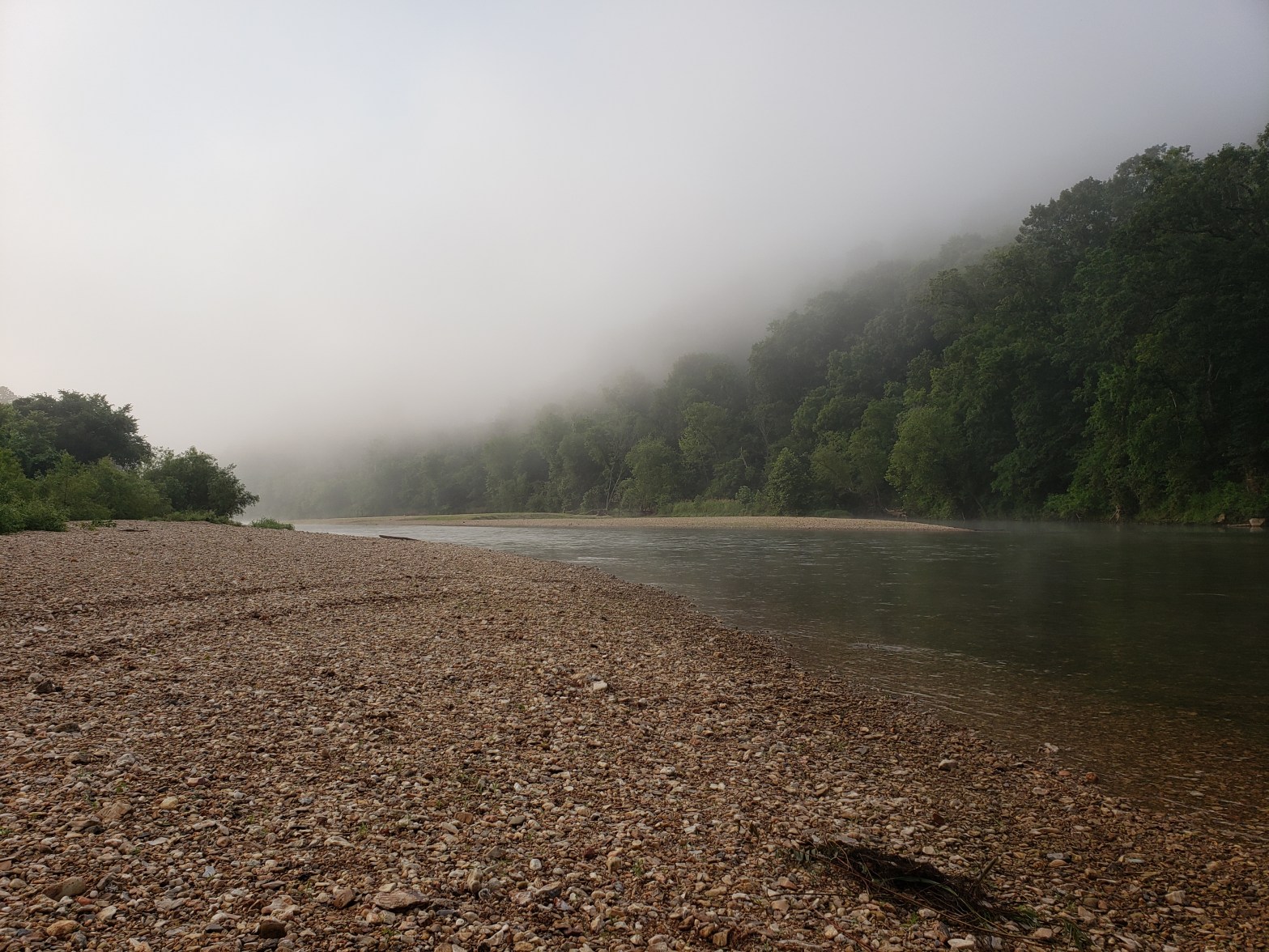
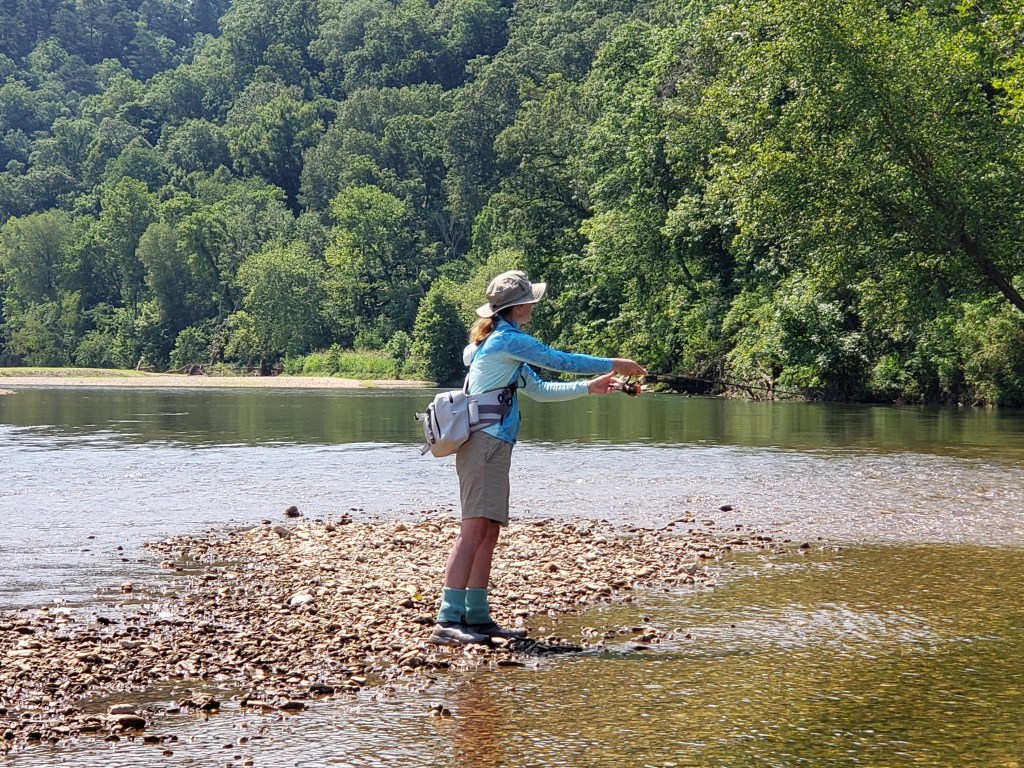
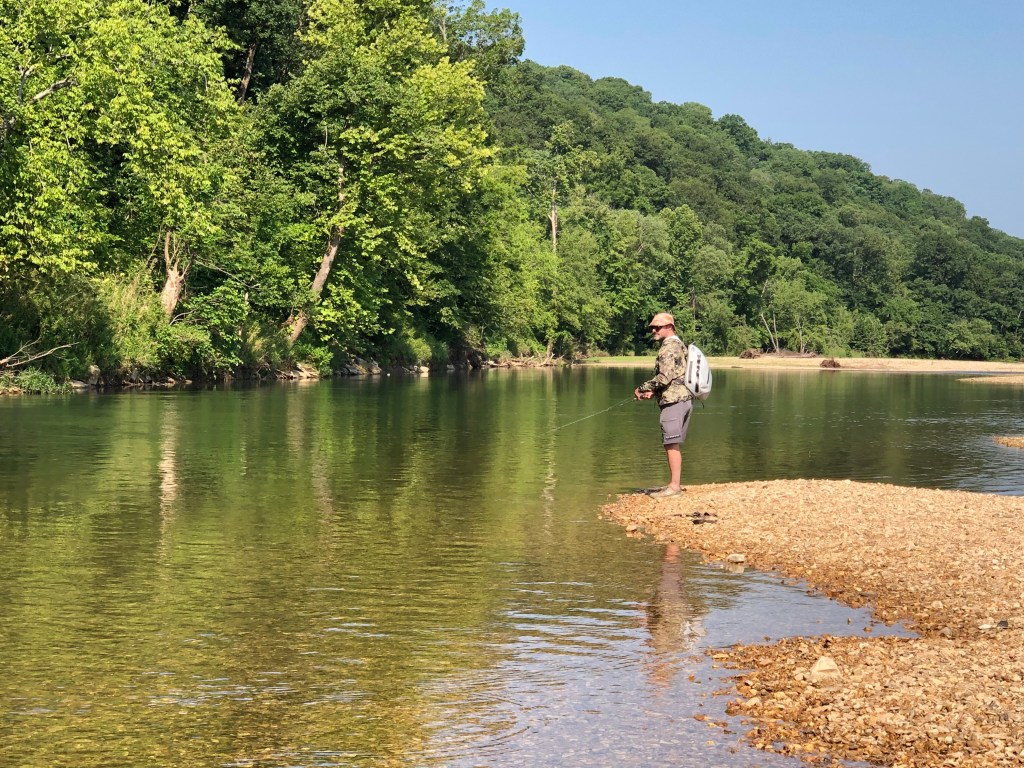
We left the house at 0535 and entered the river at 0725. There was a fog in the river valley and the temperature was 63F. It was a beautiful start to the outing. Considering that we had been inundated with rain for most of the week, we were really looking forward to some actual sunshine. Needless to say, it wasn’t long before the sun came up and the fog lifted.
With all of the rain recently, it was interesting to see how much the river had changed. Pools had shifted, gravel bars had moved, the river had split in a couple of places. What used to be an easy walk is now precarious. As the old saying goes…”no man steps in the same river twice.
My main intention for this trip was to try out a new rod. It is the Majorcraft Finetail Trekking and Travel FTX-B46/505UL.
It is a 5-piece baitcast rod with a stiffer action. I kind of like the fact that I can stash 2 rods in my pack. One is a spinning rod and the other is the baitcast rod.
Majorcraft Finetail Trekking and Travel FTX-46/505UL. Picture taken just as the sun was coming up.
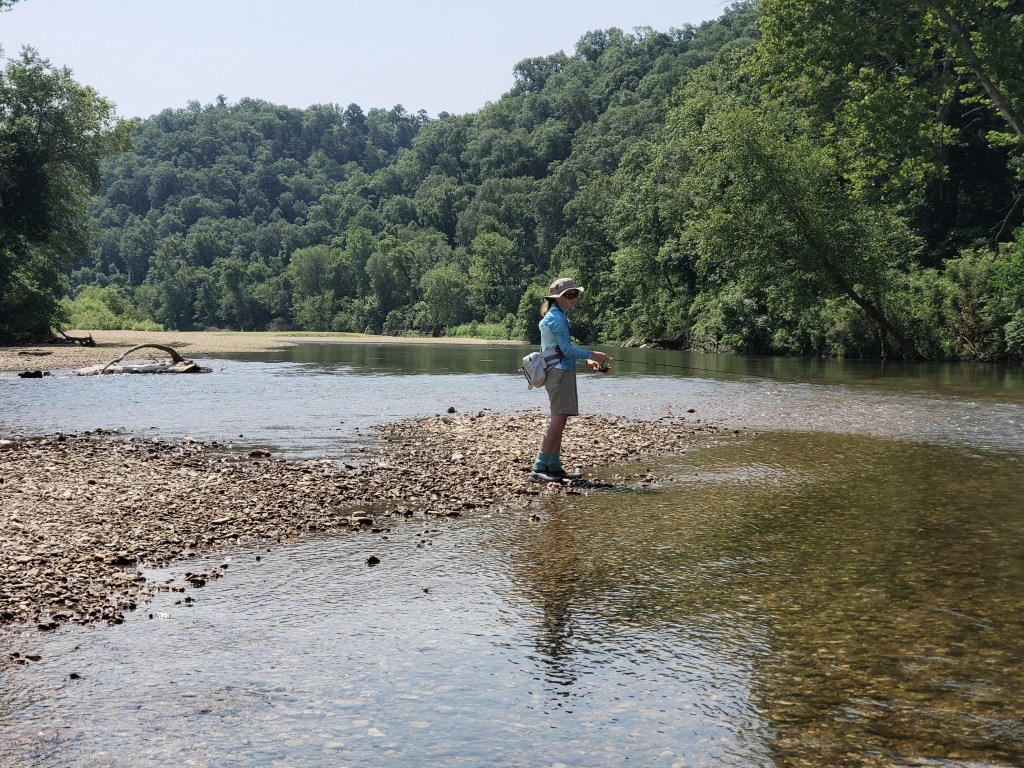
We had a really good outing with 34 fish being caught with about 8 of them being decent. Neither one of us took fish pictures since we were releasing them right away. For 3 hours we had the river to ourselves before a few other fisherpeople showed up. It was well worth the drive.
On the way out we ran into the Game Warden and he checked to see if we had our licenses…which we did. He thanked us profusely after noticing all of the trash in my sling pack I was digging out while getting my license. We talked for a bit and we thanked him for doing his job and for caring about this river. We also ran into a few other people that we chatted with and in the end we all had similar thoughts about this river. “Mum is the word” and none of us mention it, instead preferring to keep it hidden for as long as possible.
That’s what my friends call it. I call it an opportunity.
Oklahoma has a few trout streams and they usually contain too many people for my taste. I prefer my own company and hence, try to find overlooked or ignored places to fish. And catching trout is fun, I just prefer another species at this moment in my life.
I’ve spent thousands of dollars chasing the Micropterus dolomieu velox or Neosho-strain Smallmouth bass. I don’t see an end to it in the foreseeable future. Sure, I could go to the North Country and catch really big Smallmouth bass, and I’ve done that many times, but there’s something special to seeking out our native Smallmouth bass.
I don’t go with the “societal flow” or “social norms”, in fact, I could care less. I am on this Earth for a certain period of time and plan to use as much of that time as I can wisely. So I prefer to chase whatever species I am interested/fascinated in. And if I do it right, you will never know I was there. Since I enjoy my solitude and “soul time”, I don’t always give trip reports or name locations of where I’m fishing…and I think most readers understand the WHY behind it. It’s my way of recharging my internal batteries.
I enjoy fishing immensely and hope to continue doing so for years to come. I don’t care if its a really small creek leading to a stream. And if I’ve never been there…that’s a bonus.
So…Ditch Water huh? You never know what you’ll encounter. You will never know what’s around the creek/stream/river bend unless you go. And I WILL GO.
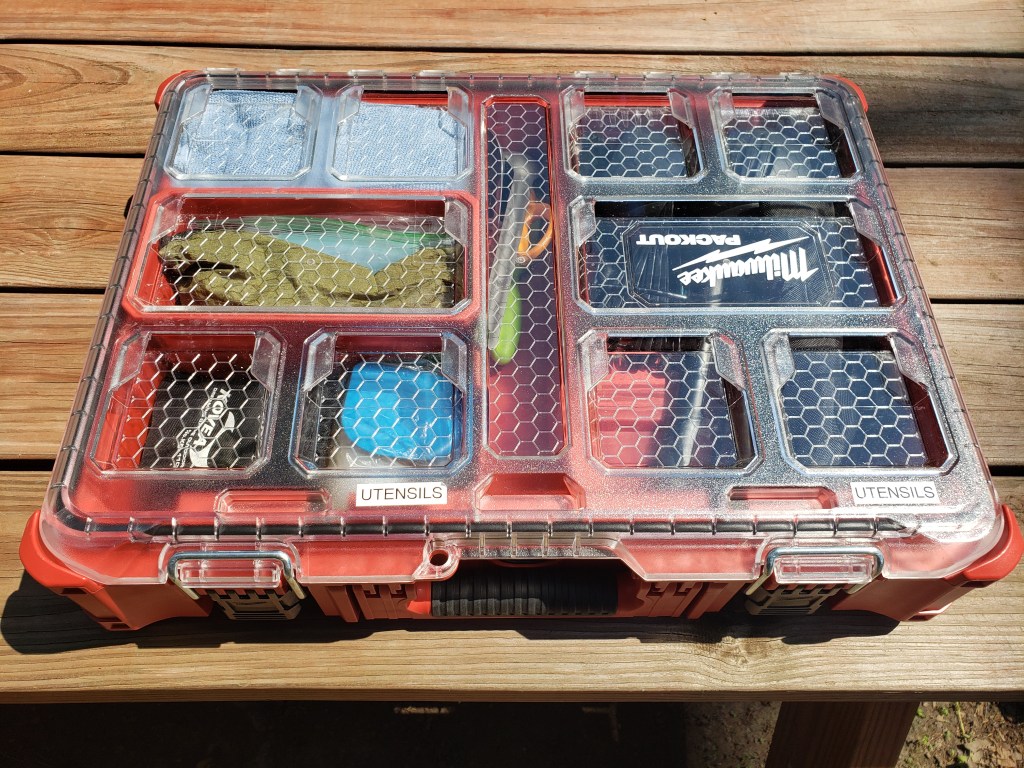
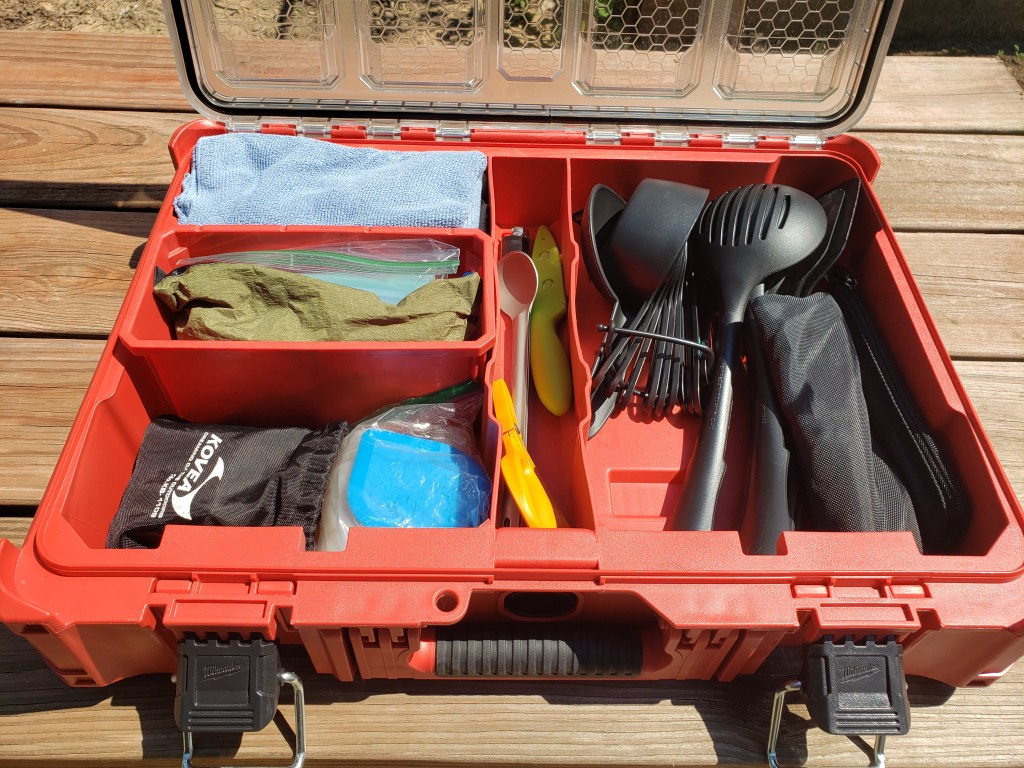
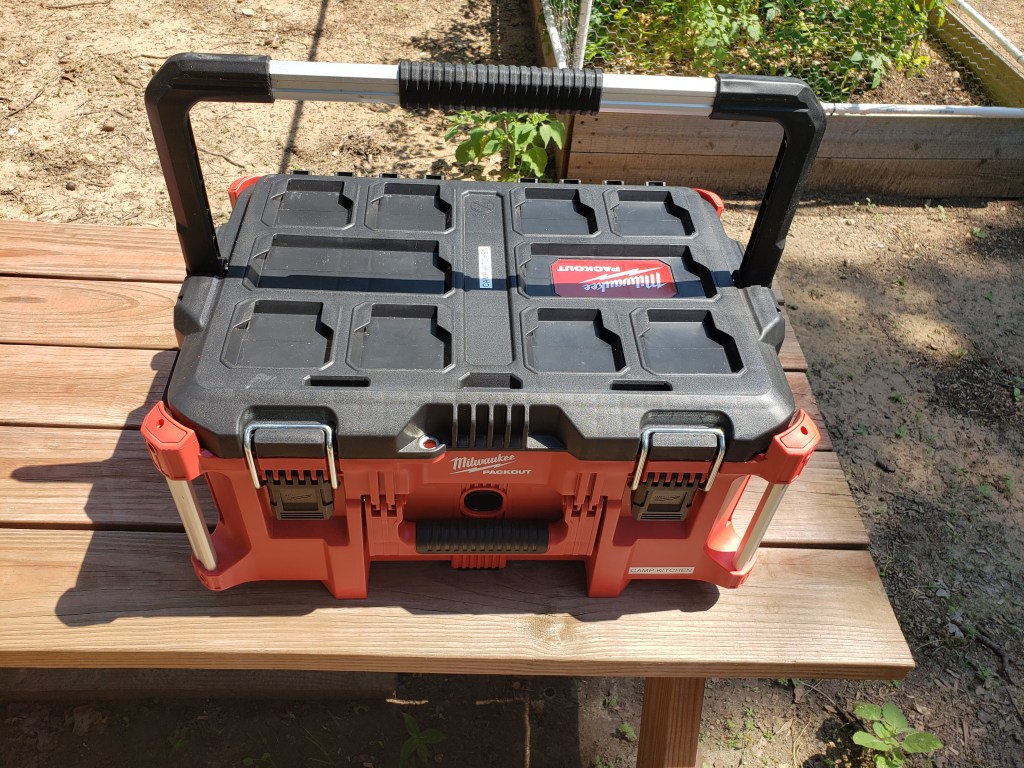
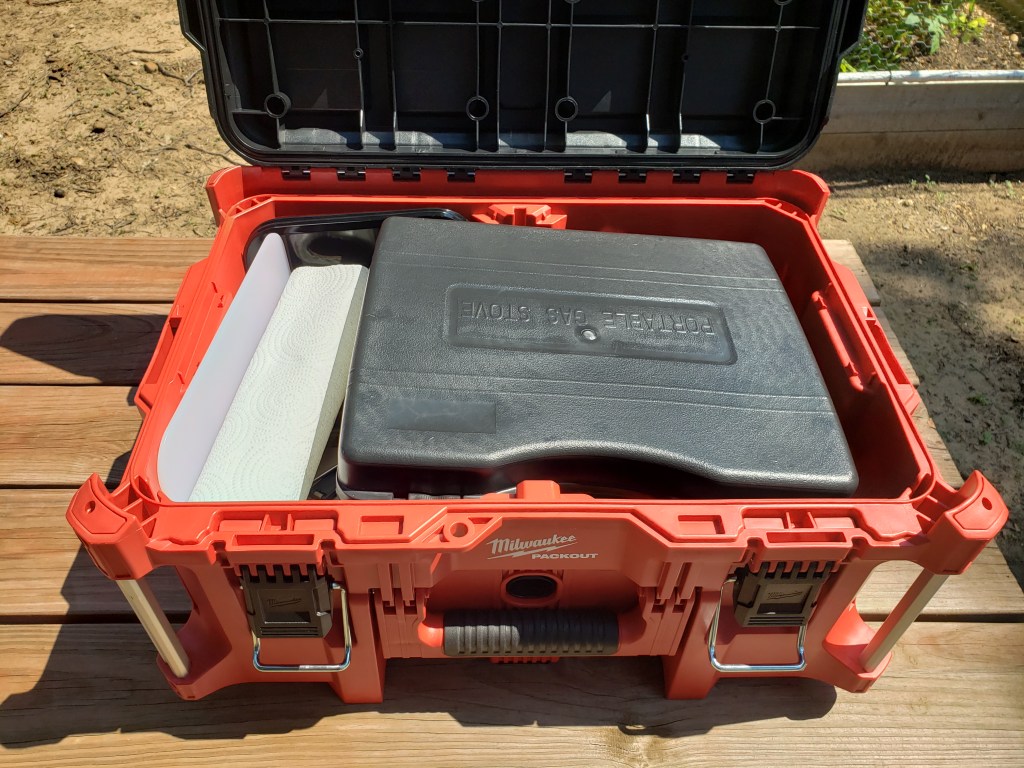
Yes, we used Milwaukee Packout Toolboxes for our Camp Kitchen as well. Told you we loved these boxes! Look at the “bright side”, the boxes are red so it’s hard to misplace or leave them behind when packing up to leave!
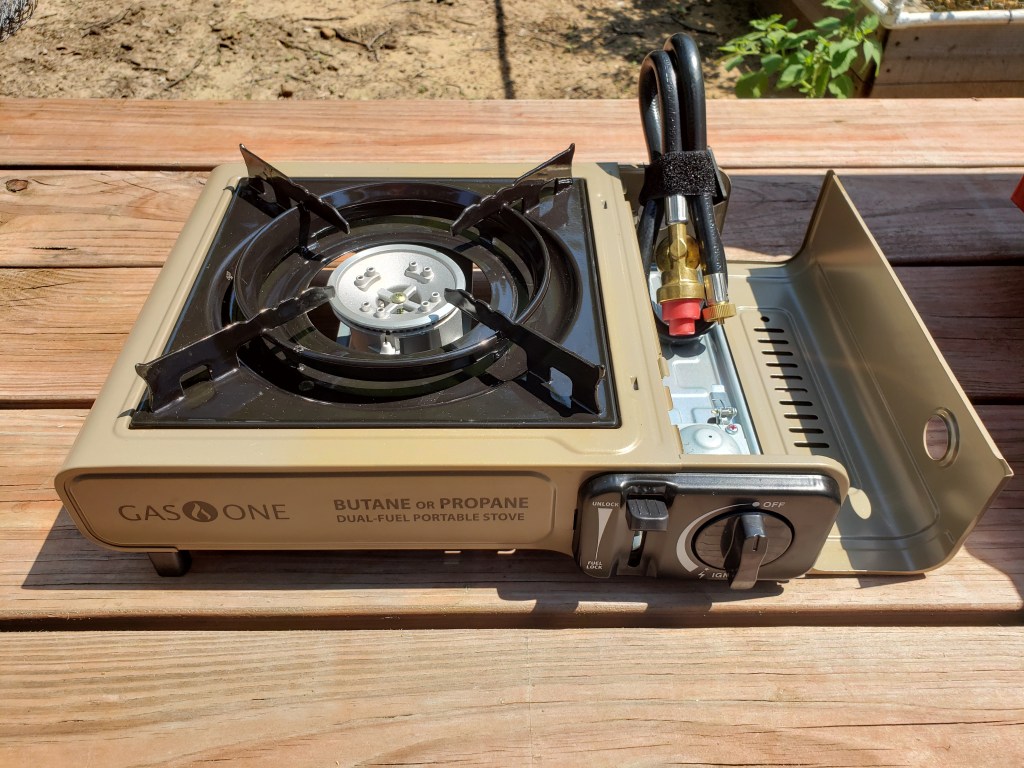
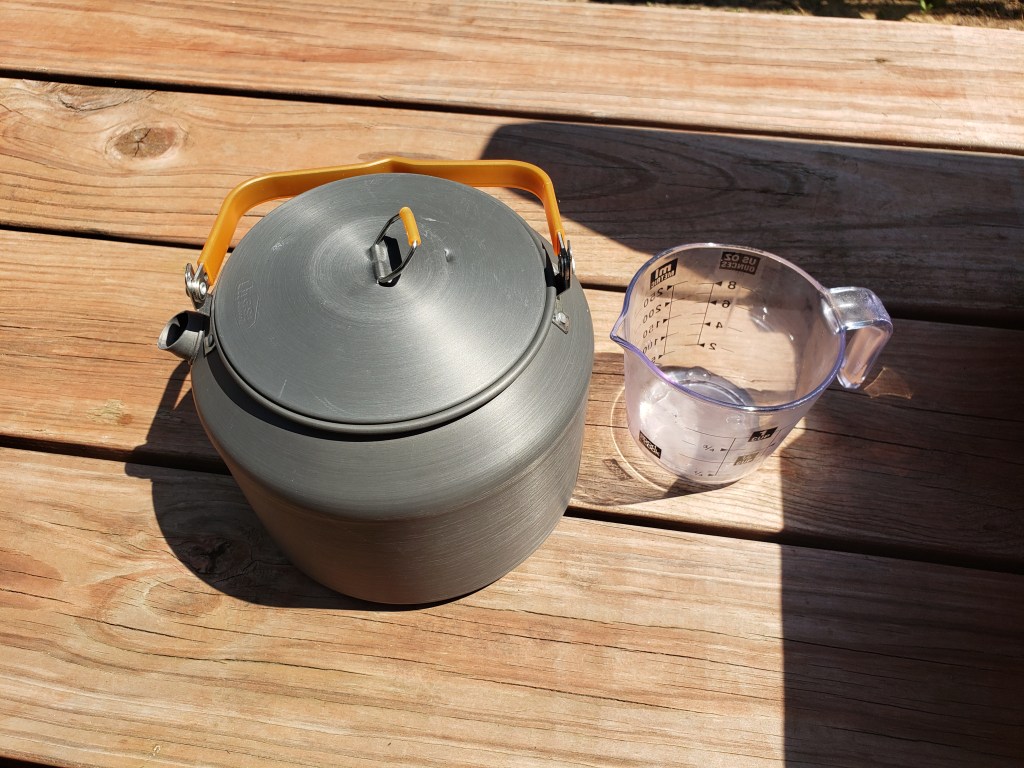
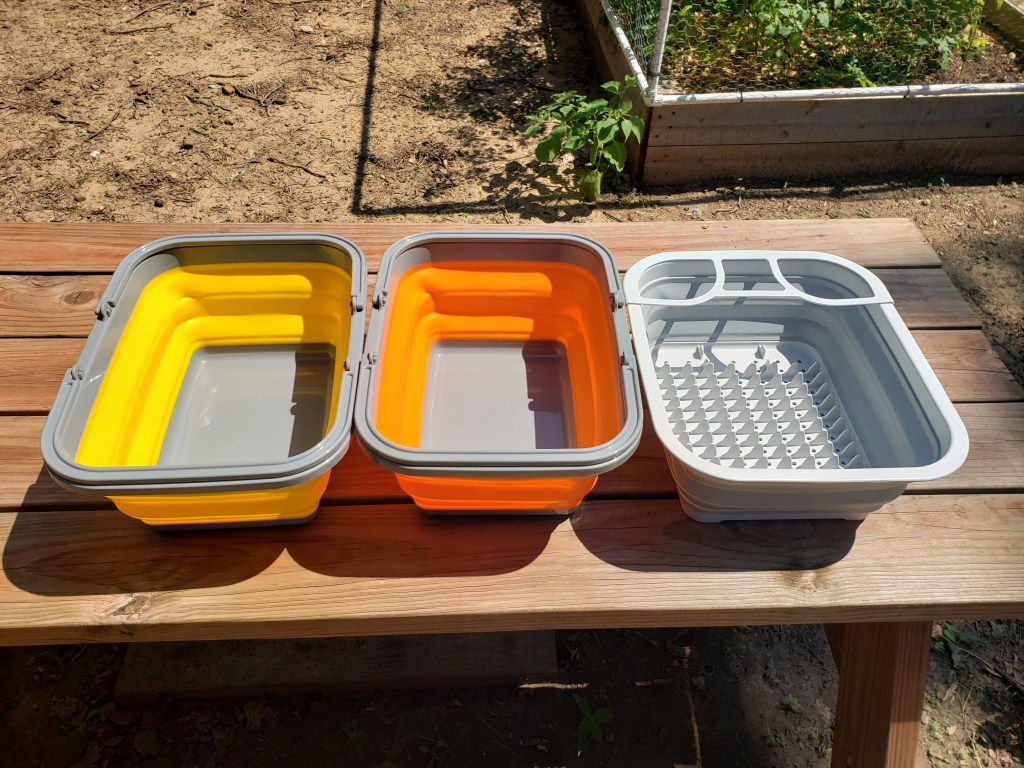
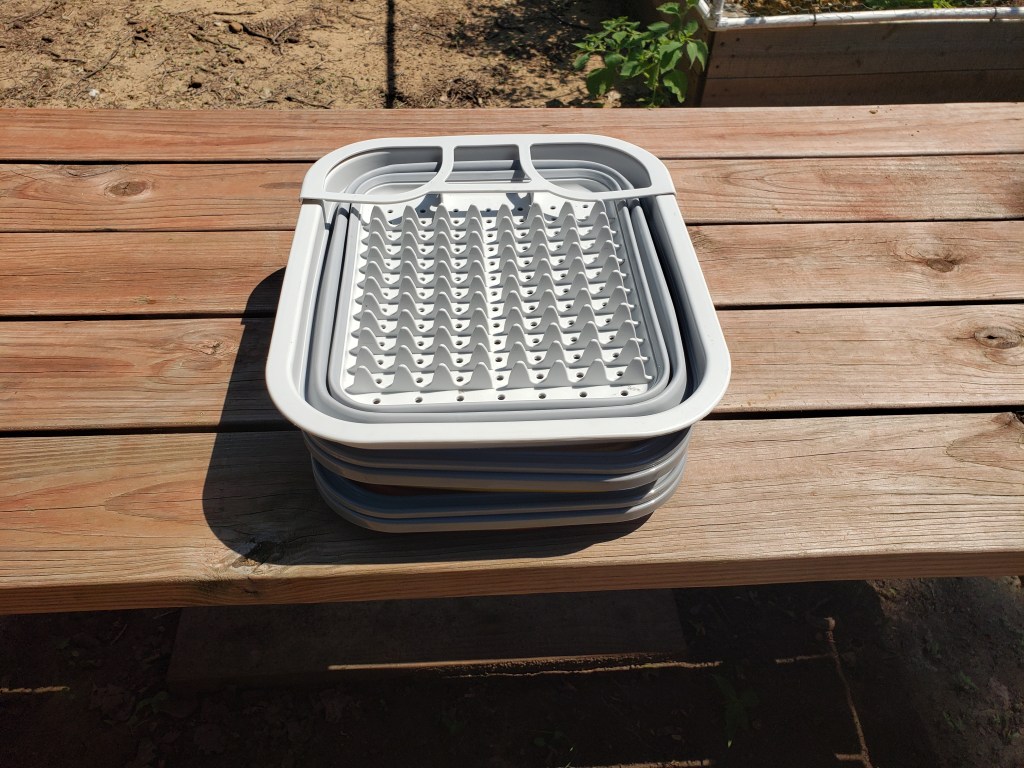
The top box is for utensils, dish towels, soap and other bits and bobs.Keeps things neat and organized. The clear lid is a plus.Everything is labelled.Sturdy handle makes it easy to carry.Everything packed inside.Pots, pans, plates etc.Our single burner cook stove.A very quiet stove. Suited our needs perfectly.Cheap cook set.Our skilletOur GSI 2L kettle for boiling water.Katadyn Hiker Pro in case we need water when off grid camping.Our in-camp washing setup. I am a big believer in proper hygiene even when camping.CollapsibleReady for transport.
We like the fact that these toolboxes can connect to each other in multiple variations. It really helps keep things together both in camp and during transport. In fact, we stacked all of these boxes on top of one another in the gear room so we know where everything is.
Currently we use the 1 pound Coleman Propane bottles for our camp stove. We are kicking around the idea of getting a small 5 pound propane tank since it’s a cheaper option in the long run.
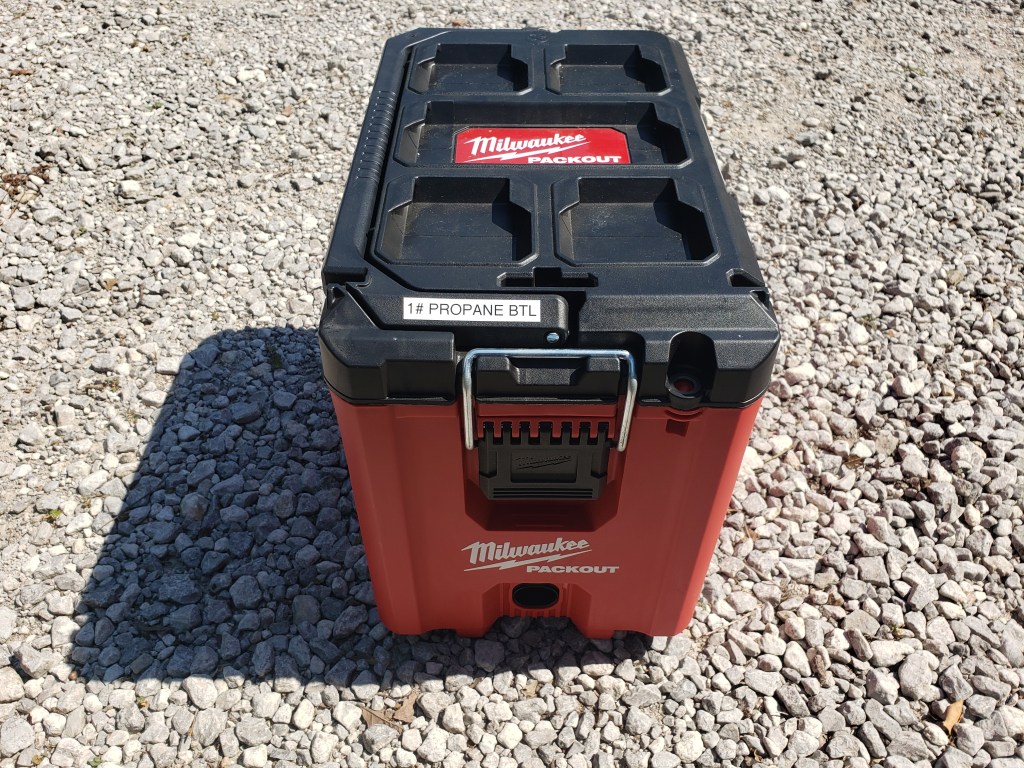
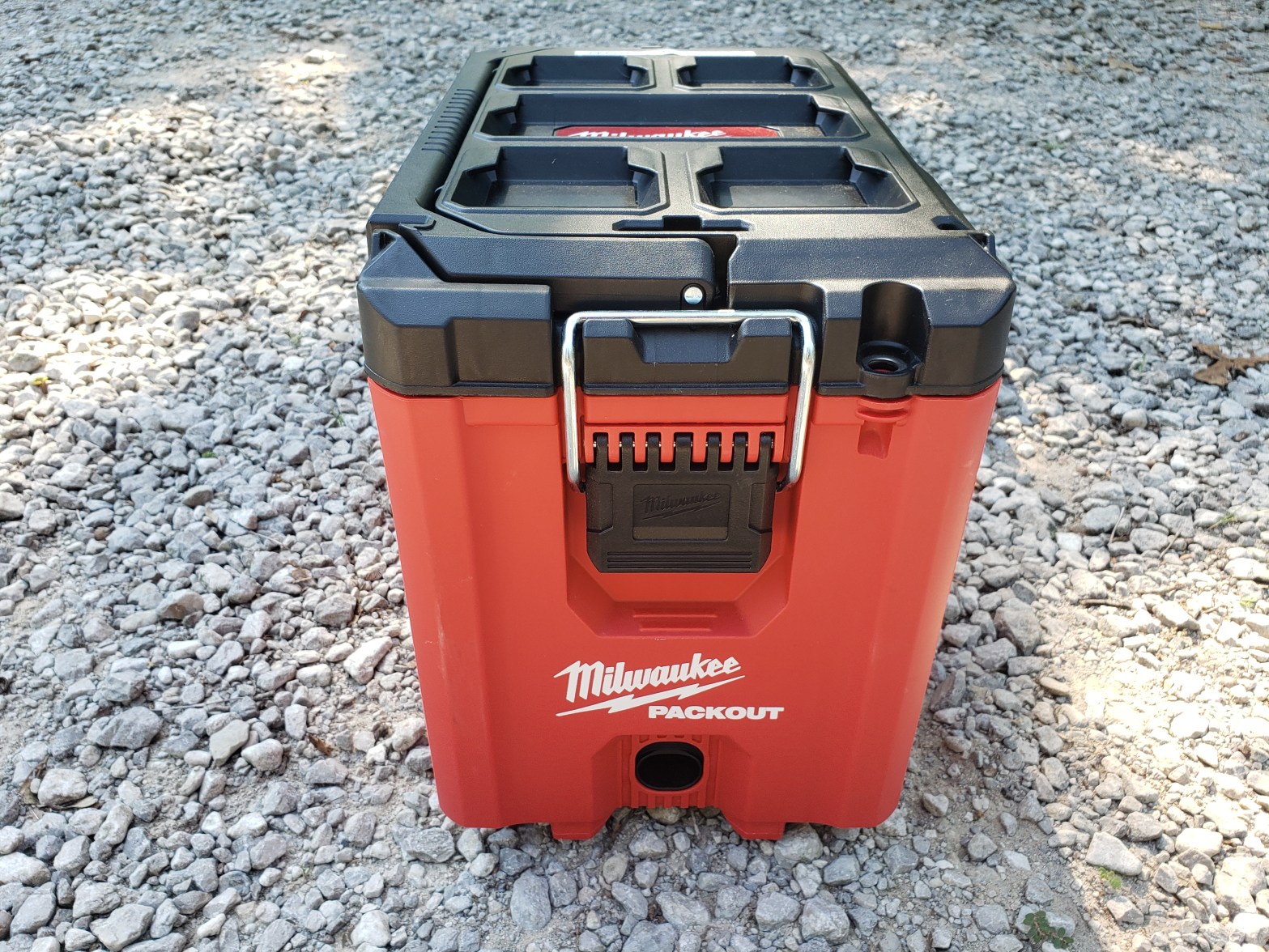
I had purchased an extra one of these Milwaukee Packout Tool Boxes because I really like the concept behind them. After finishing the Auxiliary Power Supply Box I was sitting there looking at this other box and was wondering if we could store our 1# propane bottles inside. These boxes come with internal dividers so I put them in place and quickly realized that the propane bottles fit perfectly with room to spare.
Camping Fuel Storage Box.We love these boxes.
As you can see, there is plenty of room for 5 or 6 of the 1# Coleman Propane bottles as well as a few canisters for our backup backpacking stove (Kovea Spider) and a roll of paper towels.
This little experiment worked well for us. And keeping with the modular approach…it’s easy to transport and keeps the bottles from rolling around or creating clutter by stashing them here and there. By keeping our camping system broken down into separate components it made loading and unloading the vehicle easier for both of us. Before, we used a large Rubbermaid Action Packer to store everything and it was a real pain to get everything to fit and became too heavy for one person to lift.
Our original plan for this trip was to use a 12VDC refrigerator but bad planning on my part meant if we ordered one it would not arrive in time.
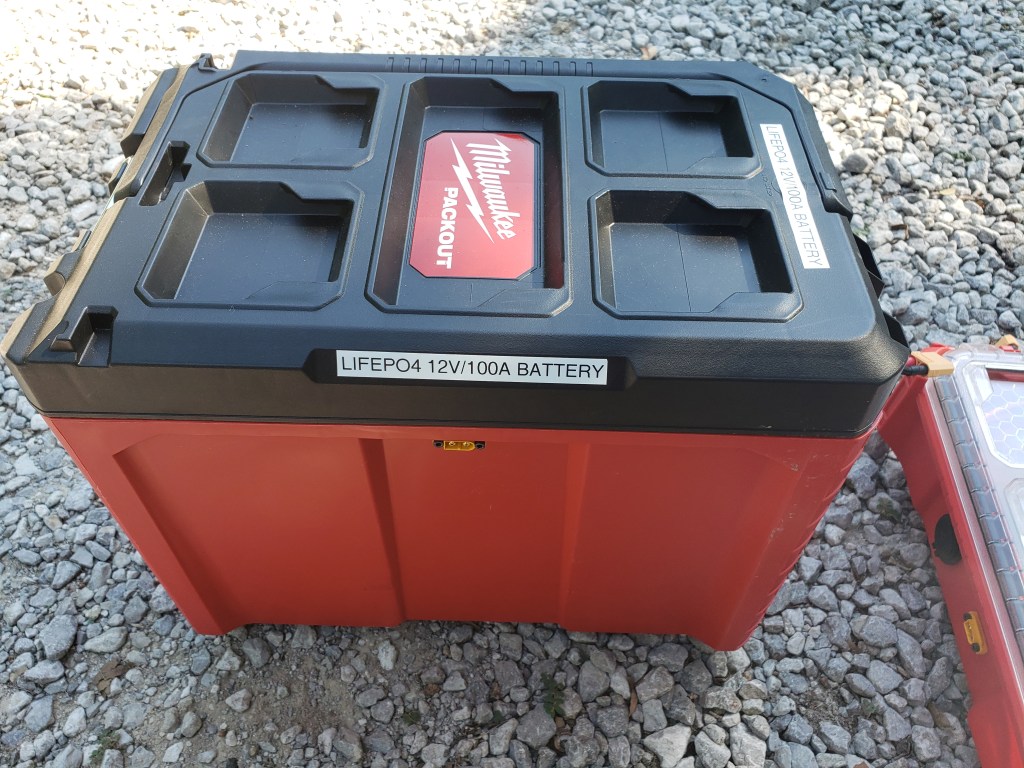
The core of this system is built upon a SOK Battery 12VDC/100A LiFePO4 battery. Yes, it is expensive, but we needed a battery that was rugged, user serviceable and had a depth of discharge that a LiFePO4 battery offers vs a standard 12VDC AGM battery. Our previous 12VDC/100A AGM battery weighed 64 pounds vs 28 pounds for the SOK battery. The SOK is encased in a steel enclosure with a built-in BMS (battery management system) and has 4 replaceable cells inside. I can’t repair a faulty AGM battery.
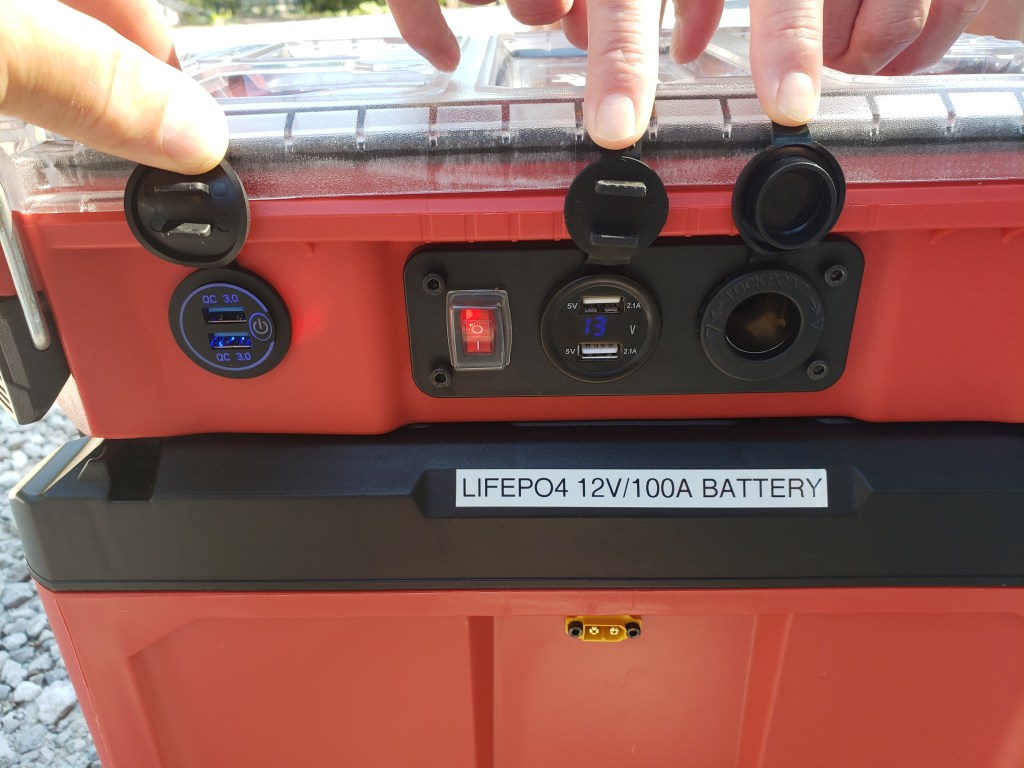
I chose a Milwaukee Packout Toolbox to house the battery. Below the lid is an XT60 connector so the battery can be charged via solar panels.I added a BlueSea fuse and a Victron 75/15A MPPT solar charge controller.This was a smaller Milwaukee Packout Toolbox I used to build a “Breakout Box” for multiple charging options. I added a dual USB 3.0 port, a switch, another dual USB 2.0 port and a 12VDC cigarette lighter port. When driving the car, I can charge the battery via the cigarette lighter port if needed.On the other side I added Anderson Power Pole connectors and another XT60 port for various charging options.Inside the Breakout Box I added a BlueSea Fuse Panel to keep things neat and organized. Each port goes to a separate fuse block. It also holds various charging cables and a Voltaic Sytems USB Touchlight.Complete unit.The battery and breakout box are connected via an XT90 connector.
The main benefit for us was a modular approach, lightweight, user serviceable, 80-90% depth of discharge and a rugged build. Not to mention this battery has a 7 year warranty and 4000-8000 charge cycles! 12VDC AGM batteries are heavy and the depth of discharge is commonly quoted at 50% but reading the manufacturers engineering specifications, you will note that a lot of them say that 50% depth of discharge is 12.2 volts.
I am also an amateur radio operator and like to operate in parks and such so I needed the added capability of a bigger battery.
On this trip we brought a laptop to edit photos and videos, the navigation tablet, 2 cell phones and 2 GoPro’s as well as various other USB powered items. I do not like using the main vehicle starting battery to charge things unless the vehicle is being driven so it made sense to bring a separate battery for our charging needs.
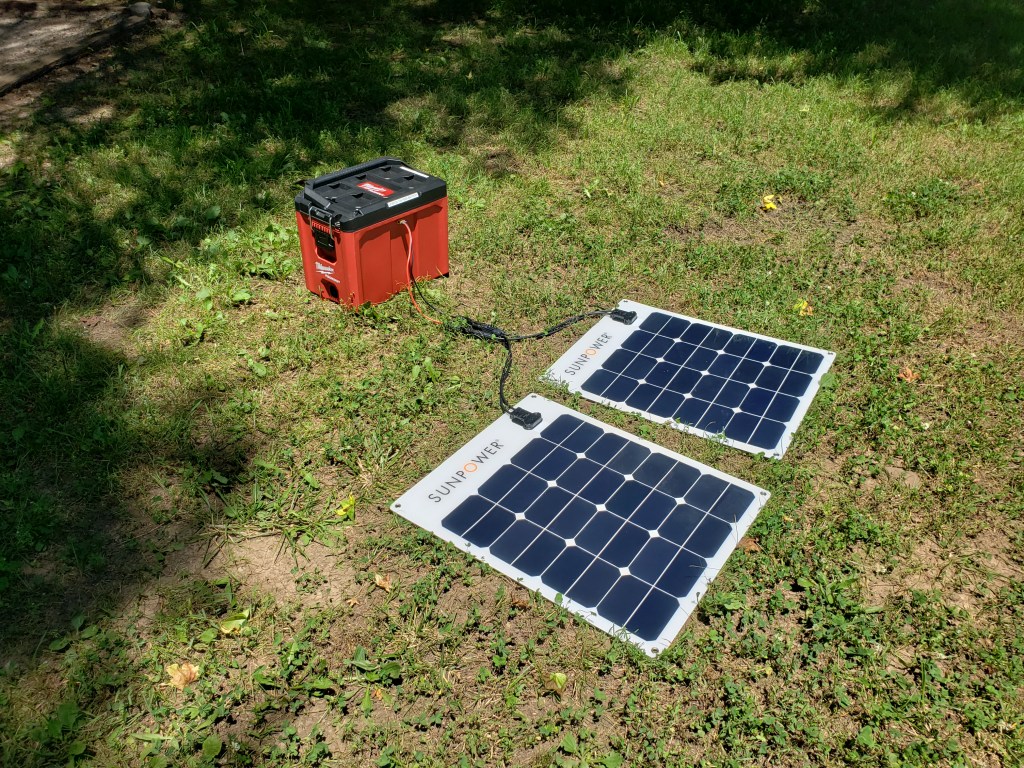
We utilized 2 SunPower 50 watt, thin, flexible solar panels while in camp to keep the battery topped off.The Victron MPPT charge controller had BlueTooth connectivity so I could easily check the charge status on my phone anytime I wanted.
We had all the power we needed or wanted for the duration of the trip. If we decide to get a 12VDC refrigerator in the future I think this battery can handle it.
The battery and breakout box ride behind the passenger seat while the solar panels ride behind the drivers seat. Just like a canoe or kayak, we try to keep the load balanced in the vehicle.
Well, that’s a snap shot of our Auxiliary Power Supply while camping. Maybe it will give you some ideas! Thanks for reading…
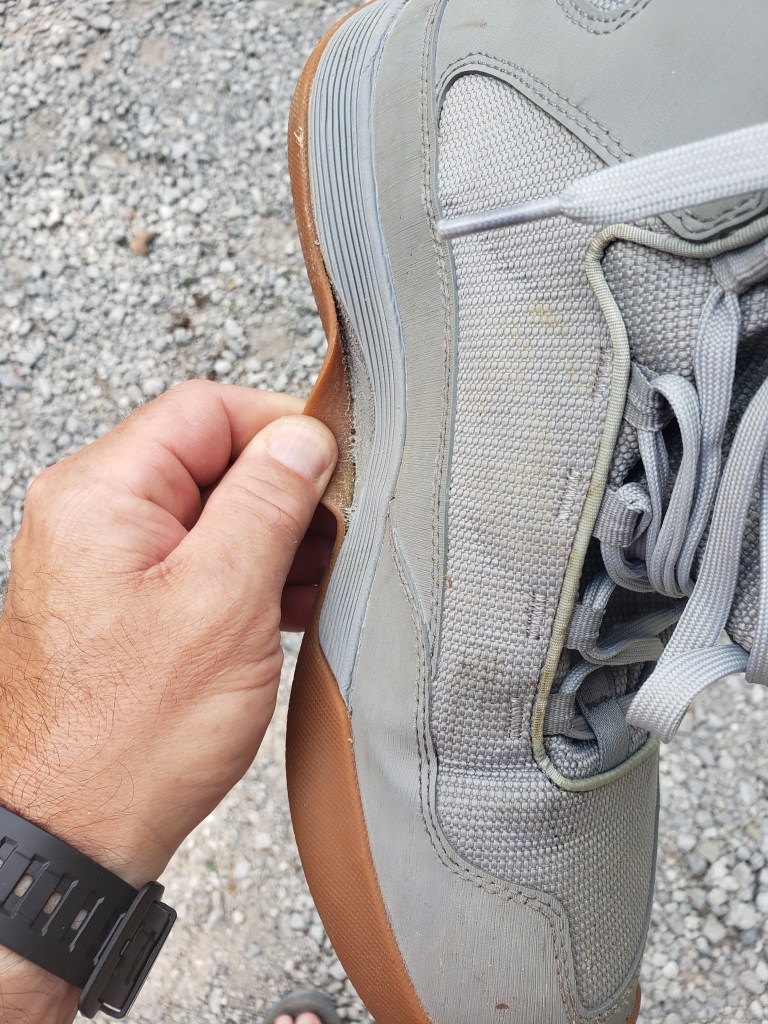
I bought these boots for wet wading back in 2018 and fished them hard for the 2018, 2019, 2020 and now the 2021 season. After countless miles the soles have started to delaminate.
Both boots are delaminating at this location.The left boot is worse than the right one.
I have looked at buying either the Simms Flyweight boot or the Simms Freesalt boot to replace these. I have used ShoeGoo to fix the heel on the right boot before but it did not hold so I may find a local shoe repair business to see what they can do to fix these. The uppers are holding up really well and the boot is still the most comfortable I’ve worn so I don’t want to give up on these boots or waste money on another pair.
Time to use my Google-Fu and find a local cobbler!
Next stop was the Sand Bar Access and Campground. With it being after 4pm we opted to grab a campsite. There was only 2 other sites taken when we arrived so we grabbed one that was away from everyone else. Again, no running water and only pit toilets for $15 per night. The campsites were spacious but poison ivy was everywhere.
This area also has a Day Use Only Area and it was packed! Apparently it is a favorite swimming hole for the locals and they were everywhere on both sides of the river. With it being our last day, we opted to hang out in camp, cook dinner and get organized for the trip home. We would have preferred fishing this section but there was just too many people around.
It didn’t take long for the campground to fill up with all sorts of people. I’ll never understand why people have to drive through a forest and into a campground with their stereos maxed out. Campground etiquette was out the window! Some guy decided to start chopping wood at 10:30 pm. It literally sounded like he was building a log cabin.
We slept fitfully until 1:30am when some locals in a truck showed up, again with their stereo blasting and were trying to party at the river. Someone at the other end of the campground got up and started screaming at them at which point they promptly turned the stereo off and left. Finally we could get some sleep. NOPE!
From two tent sites away a little girl woke up screaming that she was afraid of the dark! And I do mean SCREAMING! Her mother ended up packing up and leaving.
We slept till 5:30 and packed up and headed home. If I ever camp there again it won’t be during summer. Probably early Spring or Fall.
Again, sticking to our original tenet of exploring new roads and areas, we chose a route home that was off the beaten path. We gathered a lot of new information on this river and thoroughly enjoyed fishing it. We became familiar with the GaiaGPS app which was a definite asset to the trip, especially since we didn’t have cell service for most of our trip. We consider the cost of the upgraded app money well spent. I’m sure we will be back.
I hope you enjoyed this series of blog posts. There will be a few additional “addendum” blog posts to cover some of the gear we used and why. Thanks for reading!































 Velox Seeker